
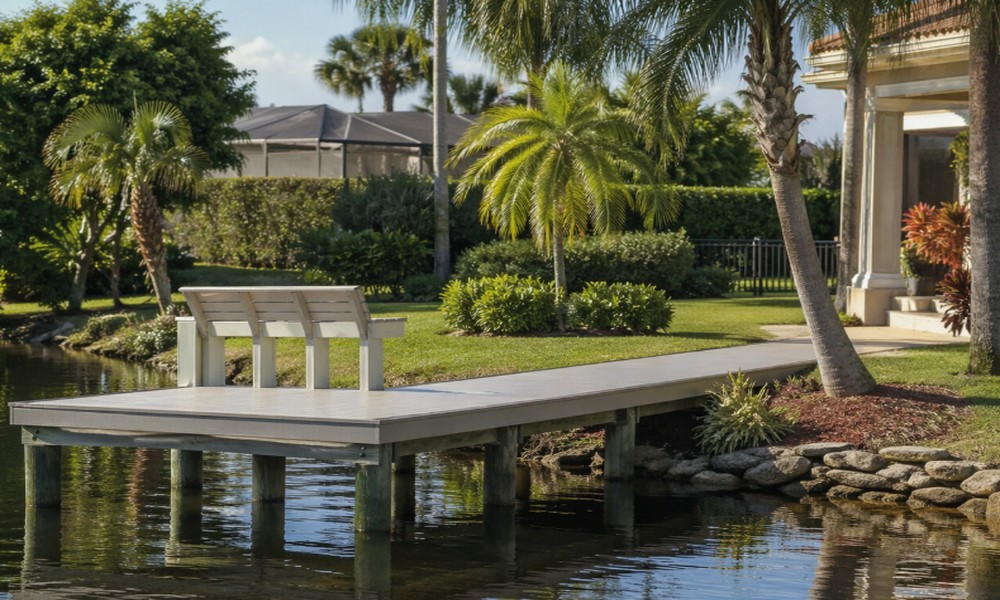
A stationary dock can turn a quiet pond into one of the best parts of your property. It gives you a stable place to fish, sit, launch a small boat, or just enjoy the view. In Florida, that kind of setup sounds perfect. But building anything outdoors here takes planning. Heat, humidity, heavy rain, and strong storms can wear down materials fast.
That is why a stationary dock is often a smart choice for a Florida pond. Unlike a floating dock, it stays fixed above the water on pilings. It feels more solid underfoot, usually needs less adjustment over time, and works especially well in shallow or muddy water.
What Is a Stationary Dock?
A stationary dock, sometimes called a fixed dock, is a permanent structure supported by posts or pilings driven into the pond bottom. Instead of floating on the water, it stays elevated above it. That gives it a steady, porch-like feel.
This type of dock works well in ponds where water levels do not change too much. It is also a strong option when the shoreline is shallow or muddy. A floating dock may shift, settle, or get stuck in muck during dry periods. A stationary dock avoids that problem by staying raised and anchored in place.
Why Stationary Docks Work Well in Florida
Florida conditions can be rough on outdoor structures. Constant sun exposure, moisture, algae, and storm pressure all take a toll. A stationary dock handles these conditions well when it is built with the right materials and proper support.
One big advantage is stability. A fixed dock does not bounce or move much when someone walks across it. That makes it more comfortable for kids, older adults, and anyone who just wants a firm surface.
It is also practical for shallow ponds. In many Florida properties, pond edges are soft, muddy, and uneven. A fixed dock gives you a clean, level platform above that mess. It stays usable even if water levels dip during dry months.
The Foundation Matters Most
The most important part of a stationary dock is the foundation. If the pilings are not set correctly, everything built on top of them is at risk.
In Florida ponds, the bottom is often a mix of muck, sand, and soft soil. Pilings need to go deep enough to reach more stable ground below. This is often done by driving or jetting the posts down through the soft bottom until they are secure.
These pilings act as the legs of the dock. They carry the weight of the frame, decking, furniture, and people using it. They also help resist shifting during storms and heavy rain.
Choosing the Right Materials
Material choice makes a huge difference in how long your dock lasts and how much work it needs later.
Wood is the classic look, and many people still like it. But in Florida, standard treated lumber does not always hold up well over time. Moisture, heat, insects, and rot can wear it down faster than expected. If wood is used, it should be rated for marine or waterfront use.
Aluminum framing is often the stronger long-term option. It does not rot, warp, or attract wood-damaging insects. It also handles humidity better and usually requires less maintenance.
For the deck surface, composite or PVC boards are popular because they resist moisture, splinters, and rot. They are also easier on bare feet and usually need less upkeep than traditional wood decking.
Framing and Structure
Once the pilings are in place, the next step is the frame. This is the skeleton of the dock. It connects the pilings and supports the decking above.
A good frame needs to be level, square, and properly spaced. If joists are too far apart, the dock may feel weak or bouncy. Tight spacing helps create a firmer walking surface and reduces sagging over time.
Strong connections also matter. In a Florida environment, ordinary hardware can corrode quickly. Stainless steel fasteners are usually the better choice because they hold up much better in damp, humid conditions.
Build for Storms and Water Pressure
Florida weather should always be part of the design. A dock does not just need to hold weight from above. It also has to resist pressure from wind, rising water, and storm movement.
That means the frame should be securely bolted to the pilings, not just lightly fastened. It also helps to choose decking and framing methods that reduce stress when water rises quickly. Good construction now can prevent expensive damage later.
Even on a pond, storm planning matters. A structure that looks fine on a calm day may fail when heavy rain and strong winds hit at the same time.
Rules, Permits, and Environmental Concerns
Before building, check local rules. Even if the pond is on private property, permits may still be required. County regulations, environmental rules, and setback requirements can all affect the project.
It is also worth thinking about the shoreline and pond health. Avoid tearing up more of the bank than necessary. Native vegetation along the edge helps prevent erosion and supports water quality. Using cleaner, longer-lasting materials can also reduce the chance of chemicals or debris entering the pond.
Finishing Touches
Once the main structure is done, you can add features that make the dock more useful and enjoyable. Built-in benches are a great option because they save space and stay secure in windy weather. A ladder can help with swimming or getting in and out of small boats. Cleats are useful if you plan to tie off a kayak or rowboat.
Lighting is another smart upgrade. Solar post caps or low-profile dock lights can improve safety and make the space more inviting in the evening.
These details are not required, of course, but they can make the dock feel less like a platform and more like part of your outdoor living space.
Final Thoughts
A stationary dock can be a great investment for a Florida pond. It offers stability, long-term value, and a cleaner solution for shallow or muddy shorelines. The key is building it with the right foundation, the right materials, and a design that fits Florida conditions.
If the structure is planned well from the start, a stationary dock can stay strong and useful for many years. It gives you a better way to enjoy the water without the constant upkeep and movement that often comes with floating systems.
Frequently Asked Questions
Do I need a permit for a pond dock in Florida?
In many cases, yes. Local building and environmental rules may apply even on private property.
Can a stationary dock work in a muddy pond?
Yes. In fact, it is often a better choice than a floating dock in shallow, mucky areas.
What materials last longest in Florida?
Aluminum framing and composite or PVC decking are often strong low-maintenance choices.
How long can a stationary dock last?
With quality materials and proper construction, a dock can last for decades, though lifespan depends on conditions and upkeep.
This post was written by a professional at Supreme Marine Floating Docks. Supreme Marine Floating Docks is dedicated to providing top-quality floating dock services Miami and marine accessories that combine durability, innovation, and superior performance. While we are a new brand, our team brings over 50 years of combined industry experience, making us a trusted name in the marine world. We are passionate about designing and delivering products that meet the highest standards, ensuring reliability and longevity in all marine environments. Whether for residential, commercial, or recreational use, our docks are crafted with precision and care, setting a new benchmark in the industry. At Supreme Marine, we don’t just build docks-we create lasting solutions.