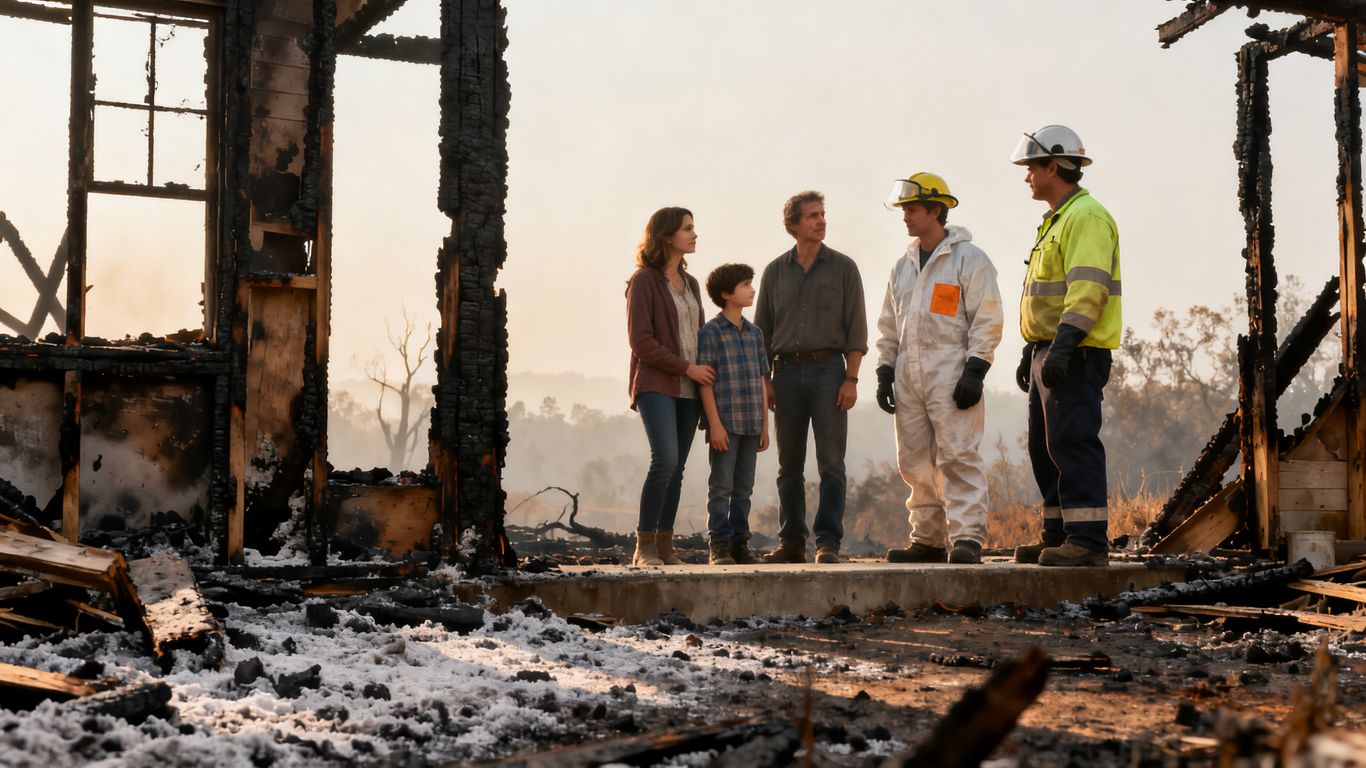
The first view of a damaged home can make it tempting to go straight inside, but conditions may remain dangerous after flames have passed. A building can conceal unstable walls, damaged utilities, or smoldering material. Returning only after officials say it is safe gives residents a chance to assess the situation without adding unnecessary risk.
Wait for officials to confirm it is safe to return
Follow evacuation orders and return instructions from local emergency officials, even if the fire appears distant or has been contained nearby. Road closures, changing wind, or hazards that are not visible from the street can make an area unsafe. If access is restricted, wait for an official update rather than trying to reach the property by another route.
Watch for structural damage, hot spots, and downed power lines
Approach cautiously and look for sagging roofs, leaning walls, broken glass, and debris that could shift underfoot. Do not enter a building that appears unstable, and stay well clear of fallen wires; treat every downed line as energized. Smoke, heat, or a lingering burning smell can signal hidden hot spots, so report them to the appropriate authorities instead of investigating on your own.
Protect yourself from ash and contaminated debris
Ash and debris can irritate the eyes and lungs, while materials in a burned home may have been affected by smoke or fire-related contaminants. Before entering an area officials have cleared, wear sturdy footwear, gloves, and a properly fitted respirator if local guidance recommends one. Limit the time spent in dusty areas, avoid stirring ash, and wash exposed skin and clothing after leaving. For burned slopes or nearby waterways, agencies may also carry out post-fire stabilization work to address hazards beyond the home site.
Keep children and pets away from hazardous areas
Children and animals may not recognize unstable surfaces, sharp debris, or contaminated material as hazards. Keep them outside the damaged area, including the yard, until it has been assessed and cleared. A trusted adult can supervise them elsewhere while other household members check the property, which also helps keep the first visit focused and calm.
2. Document the wildfire damage
Once officials have allowed access, a careful record can help the household explain what happened and track what needs attention. The extent of wildfire damage may not be obvious at first: smoke, heat, water used to fight the fire, and ash can affect areas beyond the visibly burned rooms. Documenting the scene before moving items preserves details that may be difficult to reconstruct later.
Photograph and record damage before moving or discarding items
Take wide views of the property and room-by-room photographs, then capture closer images of damaged surfaces, belongings, and visible hazards. If it is safe, record a short video while describing the location and condition of what is shown. Avoid touching or moving damaged materials just to improve a photograph; safety and preserving the scene come first.
Make an inventory of damaged belongings
An inventory gives the household a practical way to record what was damaged, where it was kept, and what it may cost to replace. Start with the items that are easiest to identify, and add details as time allows. A simple record can include:
- Item description, quantity, and room or storage location
- Approximate age, original cost, or estimated replacement cost
- Visible condition and the type of damage observed
- Photos, receipts, or other supporting records, if available
A first pass does not have to be perfect. Keep the list in a secure place and update it when new damage is found or an item’s details become clearer.
Save receipts for temporary housing and urgent expenses
Keep receipts for lodging, meals, transportation, supplies, and other costs connected to displacement or urgent protection of the home. Coverage and reimbursement rules vary, so the household should ask its insurer which expenses to document and how to submit them. Even when a receipt seems minor, recording the date and reason for the purchase may help explain why the cost was necessary.
Note the date, time, and source of each record
Label photographs and notes with when they were created and who took them. Keep copies of emails, estimates, receipts, and official notices together, and note whether a detail came from direct observation, a contractor, or an agency representative. Clear sourcing can reduce confusion later, particularly when several household members are collecting information.
3. Contact your insurer and start a claim
After immediate safety concerns are addressed, contact the insurer using the policy’s claim instructions or the company’s established claims channel. Early notice can help the household learn what steps to take next, though the process and timelines depend on the policy and circumstances. Keep a copy of the policy and claim information accessible, and ask questions whenever instructions are unclear.
Report the loss as soon as possible
Tell the insurer that the property has been affected by a wildfire and provide the information currently available. The first report may be incomplete; the household can explain what is known and follow up as inspections or documentation reveal more. Ask for the claim number, the best contact method, and the next expected step, then save those details with the property records.
Ask what your policy covers and which deadlines apply
Request a plain explanation of relevant coverage, deductibles, limits, and any deadlines for submitting documents or completing required steps. The policy language controls, and coverage may differ by household, property, and type of loss. Ask whether the insurer needs an inspection, photographs, an inventory, or specific forms before work begins.
Keep a record of calls, emails, and claim decisions
A brief contact log helps keep the process organized when conversations happen over several weeks. After each call, write down the date, the person’s name or department, what was discussed, and any action promised. Save emails and letters with the same file so that the household can refer back to the insurer’s instructions if questions arise.
Get approval before beginning non-emergency repairs
Before arranging repairs beyond immediate steps to prevent additional damage, ask the insurer whether approval or an inspection is needed. Keep damaged materials available when practical, since the insurer may need to review them. If waiting would create an urgent safety issue or lead to more damage, contact the insurer promptly, describe the situation, and document the work and expenses.
4. Arrange temporary housing and protect the property
A home may be unlivable even when some rooms or structures remain intact. The household may need to arrange a place to stay while inspections and repairs are underway, while also taking reasonable steps to limit further damage. Decisions should be made with safety in mind and coordinated with the insurer where possible.
Ask your insurer about additional living expense coverage
Ask whether the policy includes additional living expense coverage, what it may cover, and how the insurer wants costs documented. The household should confirm any limits, time periods, and approval requirements rather than assuming that every displacement expense will be reimbursed. Keep receipts and note how each cost relates to being unable to live at home.
Secure openings and prevent further damage when it is safe
If officials have cleared the property and the building can be approached safely, temporary steps may help protect it from weather, animals, or unauthorized entry. Do not climb onto a damaged roof or enter an unstable structure to cover an opening. Take photographs before and after any protective action, and check with the insurer about documentation or approval requirements.
Use qualified professionals for emergency work
Some urgent work, such as making a structure safe or protecting an exposed opening, calls for experienced help. Ask who will perform the work, what will be done, and whether the professional is properly licensed or otherwise qualified for the job in that location. Be cautious about signing broad agreements before understanding the scope, cost, and payment terms.
Keep invoices and track out-of-pocket costs
Maintain a separate record of emergency work, temporary lodging, supplies, and other expenses paid by the household. Invoices should identify the work performed, dates, materials, and amount charged. This record makes it easier to compare costs with the insurer’s instructions and to identify any unresolved payments.
5. Clean up wildfire damage carefully
Cleaning too soon or without the right precautions can create new risks. Ash and soot can spread to clean rooms, while heat and water may have damaged materials that look intact. Before beginning, check official guidance and consider whether the work is appropriate for household members or should be left to trained professionals.
Check for hazards before handling debris or household items
Look for unstable materials, exposed wiring, broken glass, sharp metal, and signs of heat before touching debris. Do not handle chemicals, containers, or food that may have been exposed to fire, heat, or smoke unless local authorities say it is safe. If the source or condition of an item is uncertain, leave it in place and seek advice from officials or a qualified specialist.
Follow local guidance for ash, smoke residue, and disposal
Cleanup recommendations may differ depending on local conditions, affected materials, and disposal rules. Contact local authorities for instructions on where debris can go and how ash should be handled. Avoid sweeping or blowing dry ash into the air, and keep potentially contaminated waste separate as instructed. A little patience can help prevent material from being spread through the home or into the surrounding area.
Use trained remediation specialists for extensive contamination
When smoke or soot has affected multiple rooms, ventilation systems, or porous materials, a trained remediation professional can assess the scope of the work. Ask for a written description of the proposed cleaning, affected areas, and costs before authorizing it. The household can share the assessment with the insurer and ask whether an inspection or approval is needed.
Avoid cleaning methods that could spread soot or damage surfaces
Different surfaces respond differently to water, cleaners, and scrubbing. An aggressive method may drive residue deeper or damage finishes, so test any permitted approach in a small area and follow product directions. When residue remains, surfaces are fragile, or there is uncertainty about contamination, stop and seek qualified advice rather than continuing by trial and error.
6. Plan repairs and support your recovery
Recovery often unfolds in stages, from making the property safe to restoring rooms and replacing belongings. A written plan can help the household compare estimates, coordinate inspections, and keep track of choices without rushing into expensive work. It is also reasonable to seek practical and emotional support while the process continues.
Get detailed estimates and verify contractor credentials
Request written estimates that explain the work, materials, schedule, and payment terms. Check credentials required in the area, ask for references, and confirm who will be responsible for permits and inspections. Compare the scope as well as the price: estimates that describe different work are difficult to evaluate side by side.
Confirm permits and inspections with local authorities
Before reconstruction begins, ask the local building department which permits and inspections apply. Requirements can depend on the type and extent of damage and on local rules. Keeping written records of approvals, inspection dates, and completed work can help the household and its contractors stay coordinated.
Consider fire-resistant materials and defensible-space improvements
As repairs are planned, the household can ask local fire and building professionals which materials and property changes make sense for the site. Options may depend on local codes, terrain, and the home’s design, so recommendations should be specific to the property rather than based on a generic checklist. Agencies may also offer wildfire recovery resources for residents and communities rebuilding after a fire.
Seek disaster assistance and emotional support when needed
Ask local agencies whether disaster assistance, recovery services, or community support are available and whether eligibility rules apply. The administrative work can be tiring, and grief, disrupted sleep, or anxiety after a fire are understandable responses to a major loss. A household member who feels overwhelmed can reach out to a health professional, counselor, or trusted support network while practical recovery moves forward.