The gardening world moves at lightning speed. One year, everyone is raving about succulents and gravel, the next, people are using rewilded meadows and edible hedgerows.
If you’ve been staring at your outdoor space, wondering whether it’s due for a refresh, the answer is probably yes. Fortunately, 2026 is a brilliant year to get started.
Whether you’ve got a sweeping country garden or a modest plot behind a terraced house, there’s something for every home type. So, ready to make it work for you? Let’s go.
Sustainability First
Before anything else, it’s worth noting that sustainability isn’t a nice-to-have in 2026. It’s the foundation everything else is built on.
UK gardeners are ditching chemical-heavy approaches in favour of organic soil management, natural pest control, and water-wise planting. Compost bins and water butts are both practical and widely recommended.
Once you’ve built a garden that supports healthy soil, manages water properly, and attracts wildlife, the rest of your design choices will perform far better.
Small-Scale Rewilding
You don’t need acres to rewild. Even a small patch left to grow a little wild can dramatically improve local biodiversity.
Leaving a corner unmown, planting native wildflowers, or installing a small log pile for insects creates genuine ecological value. It’s also, quite honestly, significantly less effort than maintaining a perfectly manicured lawn.
UK pollinators-bees, butterflies, hoverflies-are in decline due to habitat loss and changing climate conditions. A deliberately messy corner becomes a small but meaningful contribution to their survival, and yes, you’ll feel quite virtuous about it.
Edible Landscaping
Growing your own food has been around for years, but in 2026, it’s taking on a far more aesthetic role. Edible landscaping weaves food production into decorative planting so seamlessly that guests won’t realise they’re standing in your vegetable garden.
Think trained fruit trees as living dividers, climbing beans on elegant obelisks, and raised beds that double as structural garden features. You can also have herbs lining pathways, with strawberries spilling attractively over walls.
The goal is an abundance that also photographs well, a functional space, and a gorgeous garden. That’s the best possible combination.
Climate-Resilient Planting
The UK’s weather has always been unpredictable, but recent years have pushed gardeners to plan more carefully for extremes. Both drought and heavy rainfall need to be accounted for now.
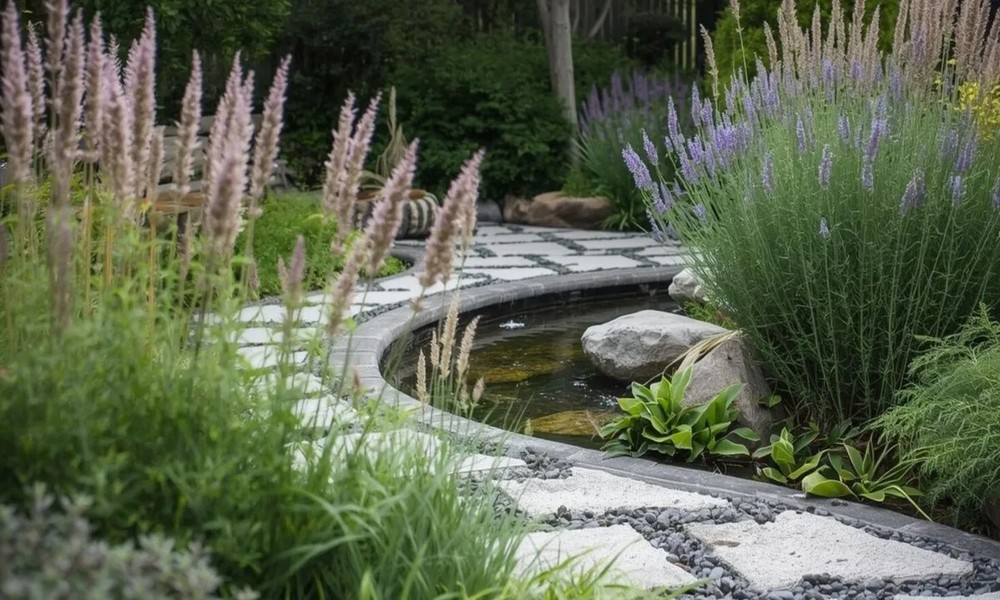
Drought-tolerant plants like lavender, sedum, and ornamental grass are increasingly popular, as are rain gardens, which are shallow-planted areas designed to absorb heavy surface water. It’s adaptive landscaping, and it’s genuinely clever.
Choosing plants suited to the UK’s temperamental weather means less intervention, less watering, and fewer disappointed faces by August.
Low-Maintenance Planting Schemes
Few things are more appealing than a garden that doesn’t demand constant upkeep. The days of high-maintenance bedding plants requiring constant attention are fading.
Perennials are the stars of 2026. These are plants that return year after year with minimal fuss.
Combine them with structural shrubs, ornamental grass, and ground-covering plants, and you’ve got a scheme that evolves beautifully through the seasons with very little effort on your part.
Less maintenance means more time to sit in the garden, actually enjoying it, which was presumably the whole point.
Sustainable Hard Landscaping Materials
Patios, paths, and walls are getting an eco-conscious makeover. Reclaimed stone, permeable paving, and recycled materials are now firmly mainstream in UK garden design.
Permeable surfaces are particularly important; they allow rainwater to filter through rather than running off into already-overwhelmed drains. It’s a small change with meaningful consequences for local water management.
If you’re planning significant hard landscaping work this year, it’s worth speaking to a professional landscaping company that can recommend responsibly sourced materials. They can also ensure your drainage works effectively.
Outdoor Rooms
Gardens are no longer just for growing edibles and flowers. UK homeowners are increasingly treating their outdoor space as a genuine extension of the house with distinct zones for dining, cooking, relaxing, and working.
Outdoor kitchens fitted with built-in barbecues and pizza ovens are having a major moment. Dining areas with pergolas and overhead planting create the feeling of eating beneath a living canopy.
The best outdoor rooms blur the line between inside and out. Comfortable weatherproof furniture, proper lighting, and a little bit of hard work transform a patio into somewhere you’ll actually want to spend an evening.
Mood Lighting as a Design Feature
Outdoor lighting has become a design discipline in its own right, rather than something added as an afterthought.
Solar-powered spotlights, string lights woven through planting, and path-level LEDs extend the garden’s hours of use dramatically. More than that, thoughtful lighting transforms the atmosphere entirely after dark.
Here are the key principles for effective outdoor lighting:
- Layer your light sources. Combine overhead, mid-level, and ground lighting for a balanced effect.
- Uplight trees and sculptural plants. This creates a dramatic effect after dark.
- Use warm tones rather than cold white. This helps create a more inviting atmosphere.
- Choose solar where possible. It aligns better with your sustainability goals.
- Keep it subtle. Aim for a soft, ambient feel rather than a harsh, overlit look.
In January, a well-lit garden makes it possible to keep using your outdoor space instead of abandoning it entirely.
Water Features for Wildlife and Wellbeing
In 2026, water features are being used to support garden wildlife while also creating a more relaxing space for people. The gentle sound of moving water is a surprisingly effective way to unwind after a busy week.
Wildlife ponds, even very small ones, provide a habitat for frogs, newts, birds, and insects. You don’t need a vast space; a half-barrel pond tucked into a corner does meaningful ecological work.
Fountain features and recirculating streams bring sensory pleasure alongside the habitat benefits. It’s one of those rare design choices that genuinely improves both your garden and the world it sits in.
Personalised, Story-Led Garden Design
The final trend is perhaps the most interesting, with a shift away from generic show garden aesthetics toward spaces that reflect the people who live in them.
In 2026, the most admired UK gardens are the ones that feel personal; they tell a story, showcase a collection of objects, or reflect a genuine passion.
Whether that’s a Japanese-influenced minimalist space, a chaotic cottage garden packed with childhood favourites, or a bold modernist design full of architectural planting, authenticity is what makes a garden remarkable.
Conclusion
If you’ve been thinking about changing your garden, consider this your sign to start.
Start with one idea that excites you, build from there, and don’t worry if it’s not perfect immediately. Gardens never are, and that’s rather the point. Your garden is waiting, so go make something you’ll enjoy!